
Vishen Lakhiani on Technology, Longevity, and the Future of Personal Growth
Dubai, UAE – Some statements linger. One of them opened Future Human 2025, this year’s Mindvalley event in Dubai.
“2025 is the last normal year in human history.”
Vishen Lakhiani delivered the line at the start of the event. As the founder of Mindvalley, he has spent years working at the crossroads of technology, human development, and societal change. The sentence set the tone for three days aimed at preparing participants for a rapidly shifting reality.
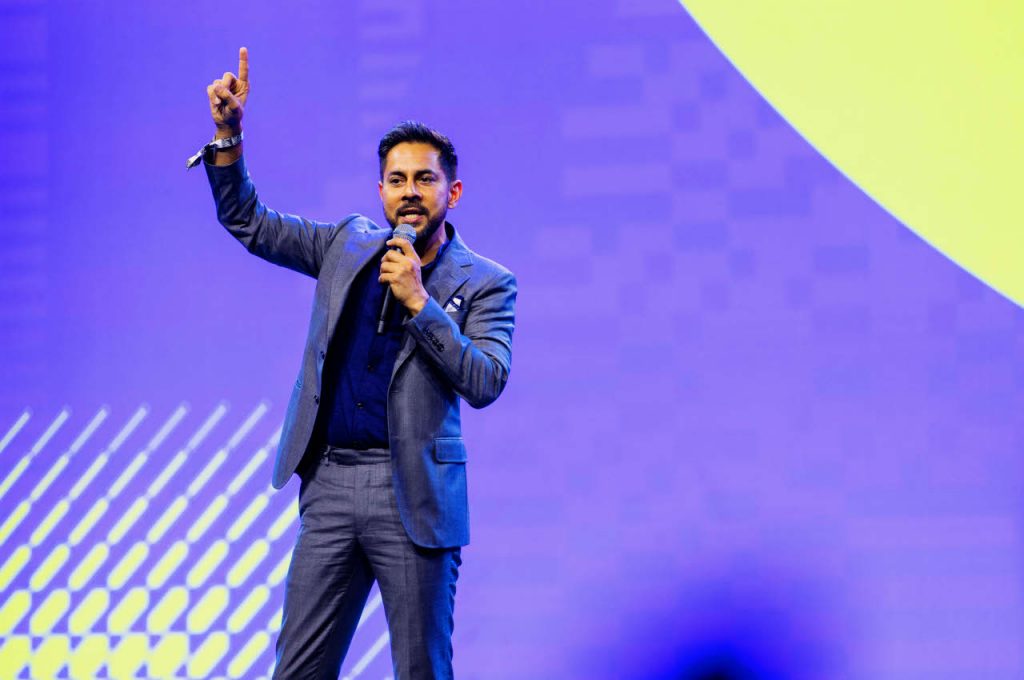
A Glimpse Into the Future
More than 2,000 attendees from over 80 countries convened at Expo City Dubai. Rather than offering a conventional personal development program, Lakhiani chose a different approach.
Specifically, he outlined a forward-looking roadmap for the years ahead. In this vision, technological acceleration, longevity research, and cognitive performance increasingly overlap. As a result, resilience appears less tied to fixed skills and more to adaptability.
In other words, growth may no longer follow a straight line. Instead, it may become more intentional, targeted, and consciously designed.
Day 1 – Productivity Under New Conditions
On the first day, the focus shifted to productivity. More precisely, speakers explored how work and life models could evolve as artificial intelligence embeds itself deeper into daily routines.
Traditionally, productivity emphasized time management. However, experts argued that future performance will rely more on cognitive relief, AI assistance, and mental clarity. Therefore, the objective was not to “do more,” but to direct attention more effectively.
Day 2 – Longevity as an Economic Factor
The second day moved the conversation toward longevity. Notably, this topic now attracts attention across politics, healthcare, and organizational leadership.
With contributions from figures such as Dave Asprey, discussions deliberately avoided trend-focused biohacking. Instead, speakers posed a broader question: How does society change when a longer, healthier lifespan becomes a strategic resource?
As the sessions unfolded, they connected metabolic protocols with lifestyle strategies and, ultimately, with organizational planning. Thus, longevity emerged not only as a health issue, but also as an economic and structural factor.
Day 3 – Consciousness as a Design Tool
On the third day, the narrative expanded once again. This time, the focus turned to consciousness as a tool for self-leadership.
Importantly, speakers avoided spiritual abstraction. Rather, they reframed manifestation as a practical skill: the ability to identify internal mental models, align them with clear intentions, and apply them consistently. Consequently, discussions centered on decision-making systems, internal narratives, and clarity as levers for transformation.
Technology as the Structural Backbone
Meanwhile, technology connected every element of the event. Future Human integrated:
- AI-supported coaching avatars
- Data-driven networking tools
- A digital platform matching participants by shared interests
- Extensive livestream access for global audiences
Taken together, these tools shaped the experience. Technology did not function as a side feature. Instead, it formed the structural backbone of the entire event.
A Quiet, Precise Shift
Throughout the three days, Lakhiani maintained a pragmatic tone. Again and again, he returned to one central observation:
The world is changing exponentially.
Therefore, humans may need to change just as deliberately.
Toward the end of the event, the Future Human Awards took place at the Dubai Dome. The ceremony recognized educators and coaches within the Mindvalley ecosystem. At the same time, it offered a calm conclusion to days marked by focus and strategic clarity.
Outlook
Ultimately, Future Human 2025 suggested how personal development, technology, and global trends may increasingly converge.
Looking ahead, the conversation will continue in 2026, once again in Dubai. In this sense, the event did not mark a conclusion, but rather the beginning of a longer dialogue.
