
How Flo Akinbiyi Builds Global Brands with Voice, Structure, and Storytelling
Dubai, UAE – In the age of AI, personal branding, and relentless media saturation, communication has become a decisive differentiator. As algorithms generate content at scale, how a message is delivered increasingly defines its impact. Long before this shift became obvious, however, one man anticipated it: Flo Akinbiyi.
For more than 15 years, Akinbiyi has worked as a speaker, moderator, and coach. During that time, he has trained executives, brand leaders, and public presenters to ensure their voice does more than inform. Instead, it transforms.
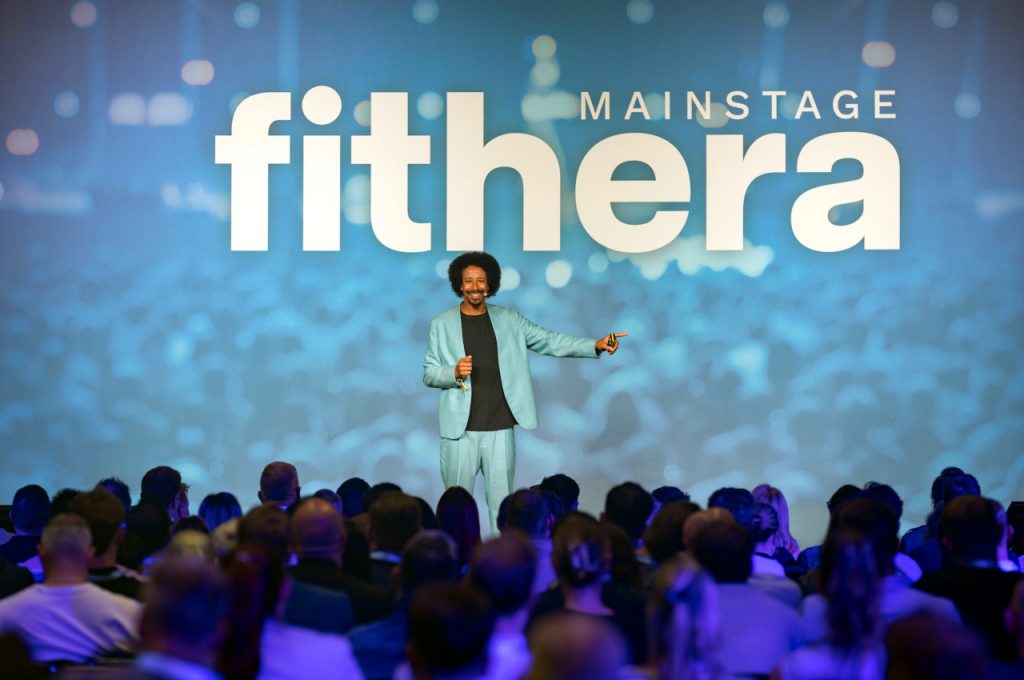
From Sound to Skill: Voice as Leadership
Initially, Akinbiyi’s turning point came during a pitch for Ford. At the time, he noticed something unexpected.
“I felt how my entire state changed when I stepped into full presence,” he recalls. “Suddenly, it wasn’t just a concept. It was energy. We won the deal.”
From that moment on, his perspective shifted. Consequently, he began to explore how confidence could be deliberately engineered through voice, posture, and presence.
Today, Akinbiyi often describes communication as a “performance sport.” Indeed, when he takes the stage, the idea becomes tangible. Over the years, he has trained more than 2,500 professionals across 200 global brands, including Ferrari, IBM, Oxford University, and the Abu Dhabi Finance League.
Moreover, his client base spans CEOs, startup founders, educators, politicians, and TEDx speakers. Despite their differences, they all face a similar challenge: being heard.
Voice as a Strategic Asset
At the core of Akinbiyi’s work lies one central belief. Voice is not a soft skill. Rather, it is a leadership instrument.
“Most people underestimate vocal precision,” he explains. “Pronunciation alone can shape perceived competence. Tonality often outweighs body language. Melody creates emotional engagement.”
As a result, leaders who fail to command their voice risk being ignored, regardless of how strong their content may be. In contrast, those who master it gain authority almost instantly.
In his words: “Voice equals value. Therefore, when you sound like a leader, you are more likely to be treated like one.”

Communication as a Scaling Engine
Interestingly, Akinbiyi often works with entrepreneurs who already have strong products and advanced technology. Yet, many of them still plateau.
During his interview with Angela Thomas on the Skillionaires podcast, he explained why. “They have the tech. They have the market. However, they can’t feel what their audience needs.”
Because of this disconnect, growth stalls.
To address it, Akinbiyi teaches leaders to listen with intention before they speak with clarity. In other words, scaling is not only about automation or reach. Instead, it depends on resonance.
Vocal Architecture: Structure Creates Authority
To systemize his approach, Akinbiyi developed what he calls “vocal architecture.” Essentially, it is a framework that aligns body language, tone, and content.
“Speed, volume, pauses, and inflection are not random,” he says. “On the contrary, they are levers.”
When used deliberately, these levers generate authority, relatability, and momentum. Consequently, communication becomes predictable in its impact, not accidental.
Between Posture and Precision: Owning the Room
What truly distinguishes Akinbiyi’s methodology is his fusion of performance psychology with business storytelling.
“How you stand shapes how you speak,” he explains. “Likewise, how you breathe determines your clarity.”
Therefore, he trains clients to reset their nervous system using power poses before high-stakes moments. At the same time, he teaches them to script openings and closings with cinematic precision.
“Without a sharp hook, there is no attention,” he notes. “And without a resonant closing, there is no memory.”
Additionally, he emphasizes emotional precision. Leadership communication, he argues, is not about oversharing. Instead, it is about choosing the right emotional tone at the right moment—whether that is certainty, curiosity, humility, or courage.
The Human Edge in an AI World
Meanwhile, as AI-generated avatars deliver flawless scripts and algorithms optimize virality, Akinbiyi stresses a different advantage: humanity.
“Authenticity isn’t sloppy,” he says. “Rather, it’s strategic.”
In fact, micro-hesitations, warmth in the voice, and confidence in silence often create deeper trust than perfection ever could. Consequently, imperfection becomes a competitive edge.
His latest initiative reflects this belief. Through closed-circle executive retreats, he works with founders, C-level leaders, and speakers on presence rather than pitch decks. These experiences are designed to reconnect leaders with their narrative, their energy, and their impact.
Why the New C-Suite Needs Champions-League Communication
Ultimately, the world does not need more content. Instead, it needs more connection.
Flo Akinbiyi’s work highlights a simple truth: voice is not secondary. It is a strategic asset. In the boardroom, on stage, or in a pitch, leaders who sound intentional tend to win.
Because growth depends on trust.
And trust, above all, begins with presence.
