
How Mitch Bittermann Is Building the Blueprint for Scalable Business Ecosystems
Dubai, UAE – While others speak of ecosystems, Mitch Bittermann builds them. As Senior Vice President (SVP) Commercial at Dubai Commerce City, he has transformed what was once just another free zone on paper into one of the most dynamic hubs for digital business models in the region.
The former supply chain executive and e-commerce strategist now leads a government initiative that combines startup culture with structural policy. In an interview with Angela Thomas, business strategist and founder of Angel Success Consulting, he shared how Dubai Commerce City became more than just a free zone. It became a vision.
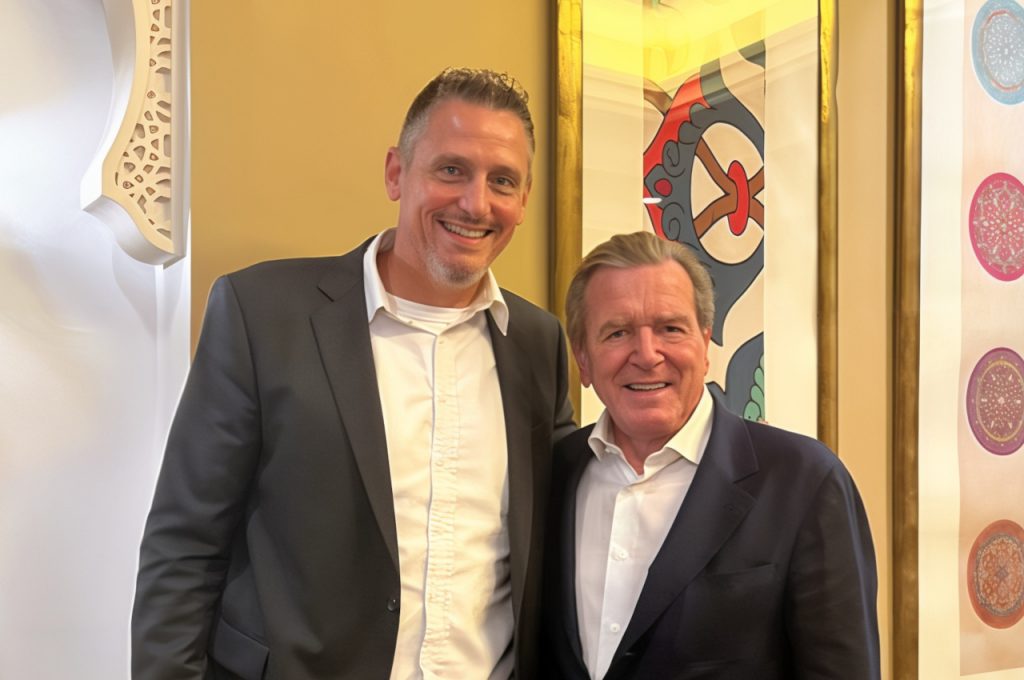
A Different Kind of Growth
“We don’t want volume. We want value,” says Mitch Bittermann. With over 500 companies and more than 6,000 employees, Commerce City has quickly moved past the stage of licensing and leasing. It now functions as a true digital district. From tech startups to automotive players, from global brands like BYD and Coca-Cola to rising local founders, the city is built around one key principle: integration.
Founders are not left alone after receiving their license. CommerceCity provides onboarding, connections, and even funding support through RCI Capital, a government-linked venture firm that offers both investment and mentorship via its sandbox concept.
Structure is Not Optional
Many founders arrive in Dubai with a vision. Few arrive with a plan. “Too many believe that zero taxes equals guaranteed success,” says Mitch Bittermann. “But most of them haven’t even created a basic business plan. Once the initial excitement fades, reality hits.”
Commerce City intervenes before it’s too late. Through regular CEO roundtables, private consulting, and an ecosystem-oriented internal app, companies are encouraged to think beyond incorporation. Client retention, operational scalability, and team development are part of the onboarding process.
Angela Thomas puts it plainly: “Scaling doesn’t mean selling more. It means avoiding that your mistakes scale with you.”
The Mindset Behind the Model
Mitch Bittermann is German. And it shows. Precision, structure, punctuality. But what sets him apart is a rare blend of corporate discipline and multicultural empathy. After two decades across Asia, North America, and Europe, he brings an open approach to leadership that helps him manage a diverse tenant base of over 100 nationalities.
His greatest strength, however, lies in connection. “I see myself less as a supply chain guy and more as the connector. I match investors with founders, service providers with clients. That’s how real growth starts.”
Beyond Dubai: The Idea of Franchising CommerceCity
Looking ahead, Mitch Bittermann sees the concept of CommerceCity extending far beyond Dubai. “Why not Bangkok CommerceCity? Or Nairobi Commerce City?” he asks. The vision is clear. A global network of interconnected digital business zones with identical standards, services, and access models. One unified platform for borderless growth.
Inspired by the consistency and scale of models like McDonald’s, he points out, “People underestimate how powerful it is to walk into a place anywhere in the world and feel at home. What if that was true for a business setup, not just a burger?”
Conclusion: A new Category of Business Zones
CommerceCity is no longer just a free zone. It’s a working proof of what happens when public institutions think like entrepreneurs, and entrepreneurs are given the support of government infrastructure. The model is built to last, not just launch. It fosters client retention, long-term relationships, and real scalability – not vanity metrics.
In a city where you can achieve in one year what might take three elsewhere, Mitch Bittermann is not chasing speed. He’s engineering sustainability.
