
Why Dubai Is Becoming the Medical Alternative
Berlin, GER – Germany’s evolving military service rules have triggered a debate that reaches beyond defense policy. The issue is not only what the law says, but how young professionals interpret it — especially in sectors that depend on international mobility, including medical healthcare.
Recent reporting has highlighted legal provisions affecting longer stays abroad by men of military age. At the same time, the German government has sought to reassure the public that ordinary travel is not being restricted under the current voluntary system. That distinction matters legally. But for many young professionals, perception matters too.
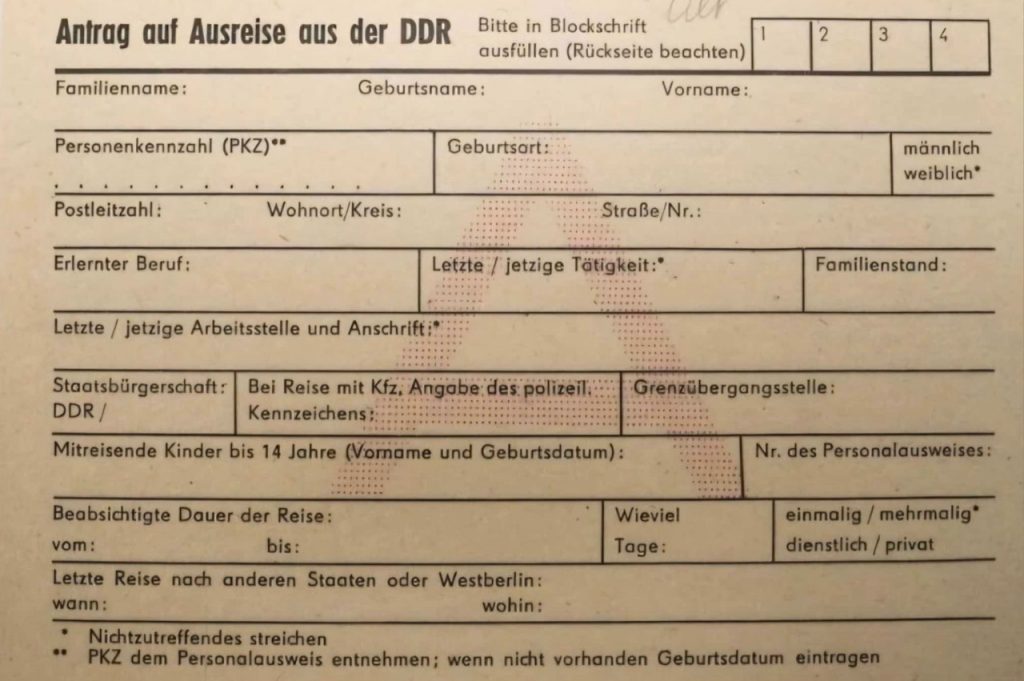
A Look Back: When Leaving the Country Required Permission
The image is striking: a formal document titled Application for Exit from the GDR — a bureaucratic form that once determined whether a person was allowed to leave the country. In the former German Democratic Republic, freedom of movement was not a given. Citizens had to apply, justify and often wait indefinitely for permission to travel abroad.
For many, mobility was controlled, not chosen.
For decades, modern Germany stood in contrast to that past. Open borders, global careers and professional freedom became the norm — especially in fields like medicine. That is precisely why even limited legal ambiguity now resonates far beyond its formal scope.
A New Reality for Medical Professionals
With new conscription-related rules drawing public attention, the question is no longer only legal. It is professional.
Even if the current framework does not amount to a general travel ban, it introduces a new layer of uncertainty into long-term planning. For medical professionals, that matters. International mobility is not a lifestyle accessory. It shapes fellowships, licensing plans, relocation decisions and career strategy.
At the same time, Germany’s healthcare system remains under pressure:
- increasing workload
- limited flexibility
- growing strain on independent and freelance structures
For many doctors, therapists and other medical professionals, the issue is therefore broader than military policy alone. It touches a deeper question: where does professional autonomy still feel realistic?
When Uncertainty Changes Decisions
This is how systems begin to shift. Not always through hard prohibition, but through friction. A rule may be narrow in legal terms and still have a wider effect in practice. Once professionals begin to ask whether mobility could become more difficult, they start reassessing their options earlier. They plan differently. They look abroad more seriously. They become more sensitive to legal clarity elsewhere.
That is where alternative healthcare markets gain relevance.
Why Dubai Gains Attention
Dubai is one of the clearest examples. The emirate has built a fast-growing healthcare sector designed to attract international talent. For medical professionals, its appeal lies not only in income or lifestyle, but in administrative predictability, international demand and the possibility of building a career within a highly mobile system.
In contrast to the growing ambiguity now being debated in Germany, Dubai presents itself as a place where professional movement remains part of the model rather than an exception to it. That difference is not merely symbolic. In a global market for medical talent, clarity is a competitive advantage.
A Strategic Option
This does not mean every professional should leave Germany. Nor does it mean the current legal debate automatically translates into immediate restrictions on daily life.
But it does mean that internationally minded professionals are beginning to think more strategically. They are no longer asking only whether Germany still works. They are asking whether they should build a real alternative while the option remains open and manageable.
Programs such as Dubai Docs Fast Track position themselves in exactly that space: not as a dramatic escape route, but as a structured pathway for medical professionals who want to evaluate international options seriously.
What About the Future?
The current debate in Germany may still prove narrower in practice than early reactions suggest. But one thing is already visible: legal uncertainty changes behavior long before formal restrictions fully do.
For young professionals in medicine, the issue is therefore not simply whether a rule exists. It is whether freedom of movement still feels dependable enough to build a future around it.
And once that confidence begins to weaken, other systems — clearer, faster and more internationally oriented — inevitably start to look more attractive.
