
How Ma’an Is Redefining Social Impact in Abu Dhabi
Why social responsibility is becoming central to the UAE’s future vision.
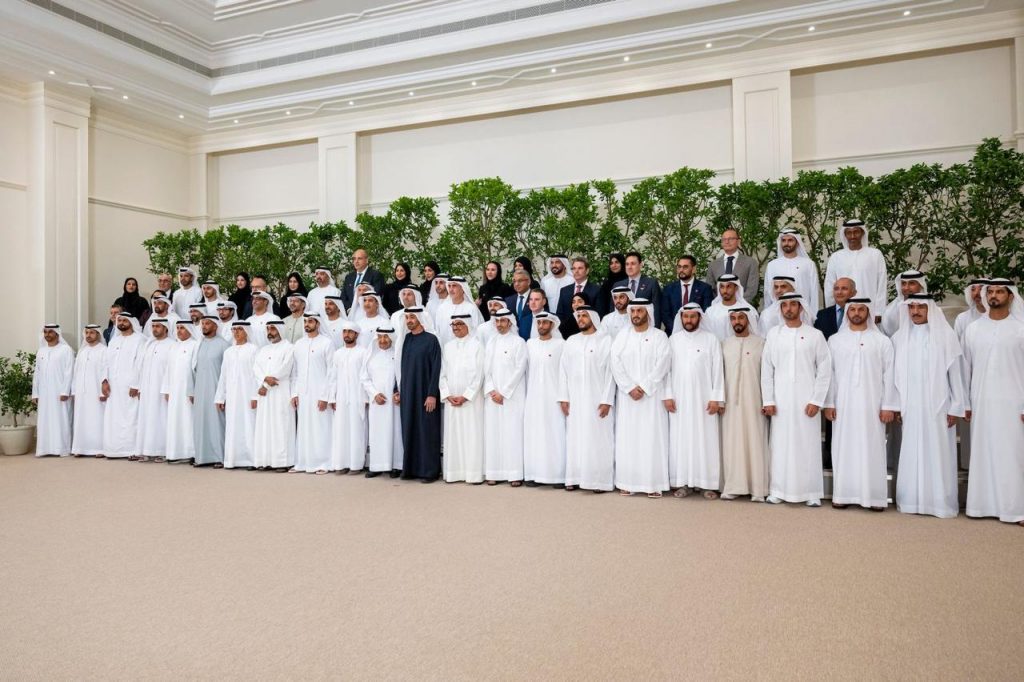
Recently, UAE President Mohamed bin Zayed Al Nahyan welcomed contributors supporting initiatives of Authority of Social Contribution – Ma’an — the Abu Dhabi Government’s official platform dedicated to receiving and directing social contributions toward meaningful community impact.
The gathering was far more than a ceremonial photo opportunity.
It reflected something deeply embedded within the Emirati mindset:
the belief that economic success and social responsibility must evolve together.
The Modern Evolution of Philanthropy
What makes Ma’an especially interesting is that it represents a modern evolution of philanthropy.
Rather than treating charitable giving as isolated acts, Ma’an functions as a structured governmental ecosystem that connects:
- public sector institutions,
- private companies,
- entrepreneurs,
- social enterprises,
- volunteers,
- and individual contributors.
The objective is clear:
to create measurable and lasting social impact across Abu Dhabi.
This approach reflects a broader transformation happening across the UAE, where contribution is increasingly being integrated into long-term national development rather than viewed as occasional charity.
The Numbers Behind the Vision
The scale behind these initiatives is significant.
According to official reports, Ma’an deployed more than AED 220 million toward social development projects in 2025 alone, supporting initiatives across:
- healthcare,
- education,
- sustainability,
- infrastructure,
- community wellbeing,
- and people of determination.
These projects are designed not only to address immediate challenges, but to strengthen long-term societal resilience and quality of life across the emirate.
Investing in Social Architecture
What becomes visible through initiatives like these is the UAE’s broader leadership philosophy.
The country is not solely investing in skyscrapers, technology, or economic growth.
It is also investing heavily in social architecture:
the systems that create stronger communities, resilience, and long-term societal stability.
This is one of the reasons why many international entrepreneurs, investors, and leaders increasingly see the UAE not simply as a business destination, but as an ecosystem built around future-oriented thinking.
Especially in Abu Dhabi, social contribution is no longer viewed as an optional corporate gesture.
It is becoming part of a wider national identity.
Creating a Culture of Sustainable Contribution
Another remarkable aspect of Ma’an is its focus on sustainable participation.
The authority supports:
- recurring contributors,
- volunteer networks,
- social entrepreneurs,
- nonprofit organizations,
- and companies actively building long-term impact models.
This creates a culture where contribution is not episodic —
but integrated into society itself.
The emphasis is not only on giving, but on building structures that continuously strengthen communities over time.
A Leadership Model Beyond Economics
For international observers, events like this also reveal something often misunderstood about the Gulf region.
Behind the global business headlines lies a leadership culture strongly centered around:
responsibility,
community,
legacy,
and collective progress.
And perhaps that is one of the UAE’s greatest strategic advantages:
its ability to combine heritage, humanity, innovation, and governmental execution within one unified vision.
As the UAE continues to position itself as a global hub for business, innovation, and diplomacy, initiatives like Ma’an show that the future of leadership may not only be defined by economic performance,
but by the ability to create meaningful social impact at scale.
